
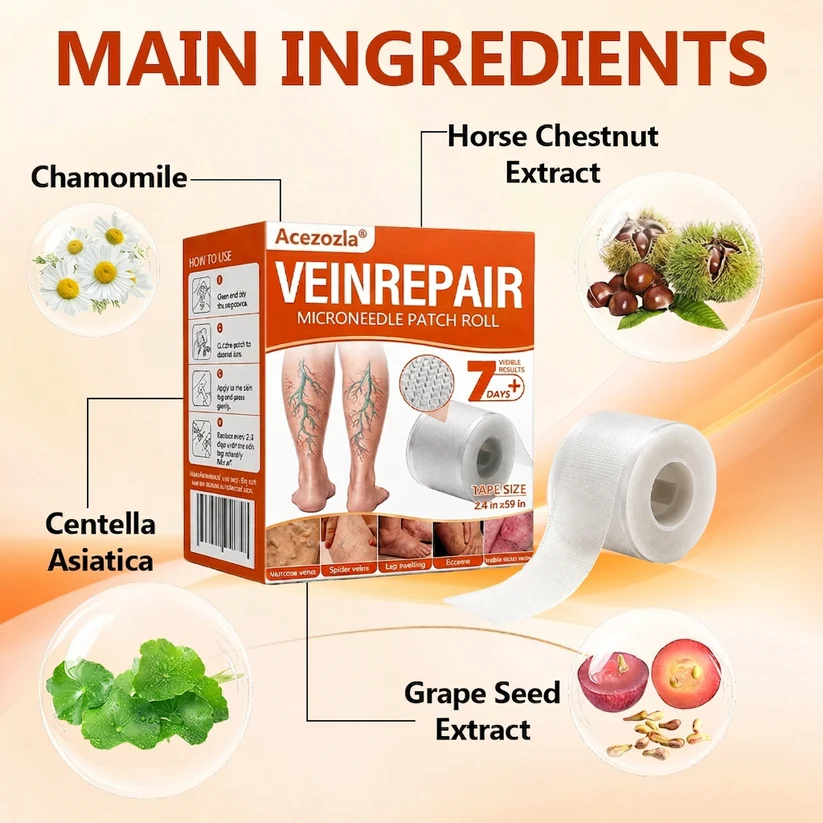

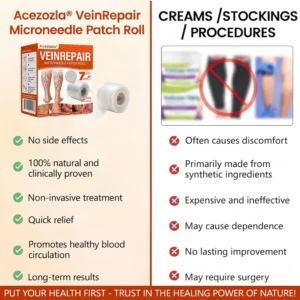
Acezozla® VeinRepair Microneedle Patch Roll
This one crosses a line the previous four didn’t. It’s not just misleading marketing — it’s selling what it claims is a prescription drug delivered via medical device technology, over the counter, from an unbranded seller, for a serious medical condition. That combination is genuinely dangerous. Let me be specific.
The Polidocanol problem — this is the big one:
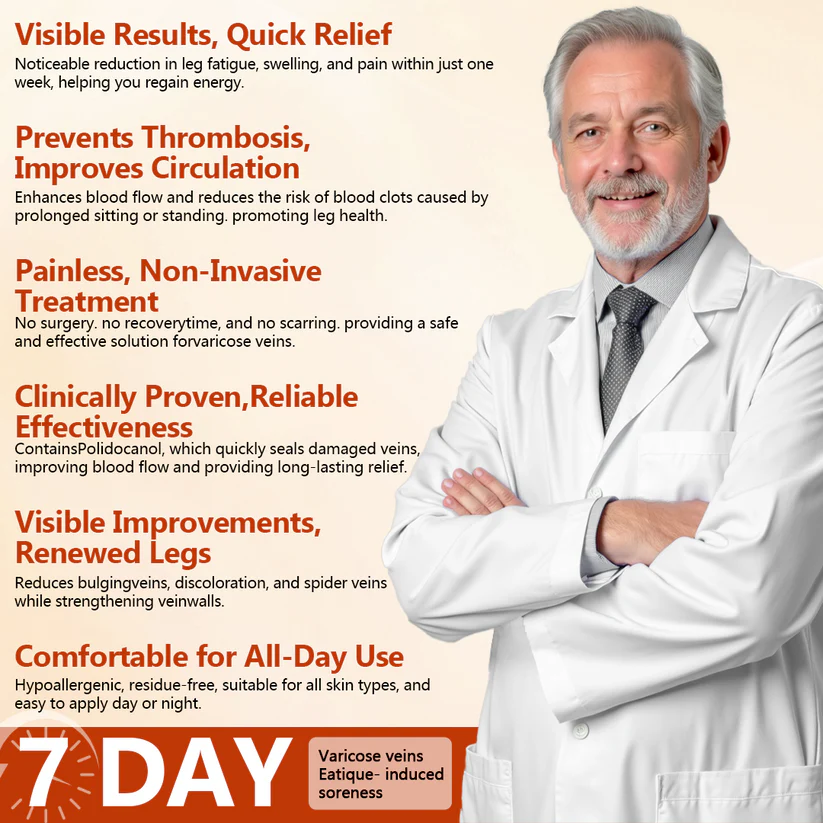
Polidocanol is a real medication. It’s a prescription sclerosing agent sold under brand names like Asclera and Varithena, approved by the FDA and other regulators specifically for the treatment of varicose and spider veins. It works by being injected directly into the vein by a trained physician, where it damages the vein lining and causes the vein to collapse and be reabsorbed by the body.
Selling polidocanol in a self-administered over-the-counter patch is not a thing that legitimately exists. If the patches truly contain polidocanol delivered via microneedles into the skin near veins, the potential harms include:
- Skin ulceration and necrosis at the application site
- Hyperpigmentation
- Allergic reactions, including rare but documented anaphylaxis
- If any reaches a vein in uncontrolled dosing: thrombophlebitis, deep vein thrombosis, pulmonary embolism
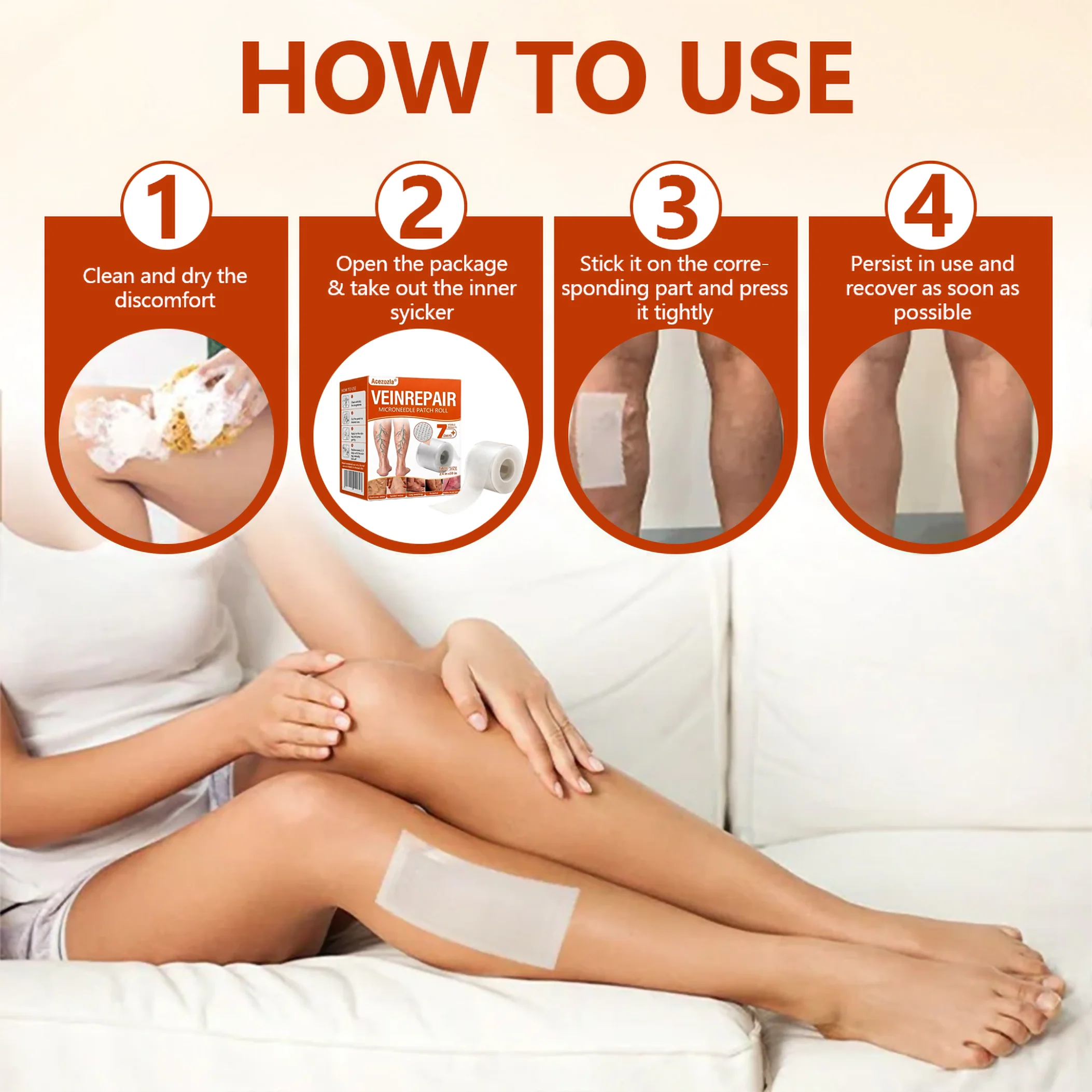
If the patches don’t actually contain polidocanol and the listing is lying about ingredients — which given the rest of the page is entirely plausible — then you’re buying a mystery product from an unknown factory and applying microneedles to your skin.
Either possibility is bad. There is no good version of this product.
“FDA-certified” — this is a fabricated claim:
The FDA does not “certify” products. It approves drugs, clears certain medical devices, and registers facilities. The phrase “FDA-certified” is a specific tell used by sellers who want to imply regulatory legitimacy without triggering searchable claims. A real FDA-approved sclerotherapy product would have a drug application number and be sold through pharmacies with a prescription — not on a Shopify page with 🔥 emojis and “Only 5% left in stock.”
Medical claims stacked without evidence:
- “96% success rate in treating chronic venous insufficiency at home”
- “Clinical study involving 12,000 participants” (and separately “Tested on over 18,000 patients”)
- “92% saw reduced visible varicose veins… within 7 days”
- Bundle tiers explicitly promising to “repair skin discoloration and ulcers” and “completely repair and strengthen blood vessels”
Chronic venous insufficiency and venous ulcers are serious medical conditions. Untreated CVI can progress to skin changes, chronic wounds, and increased risk of deep vein thrombosis. Someone buying this instead of seeing a doctor because the page promises to “repair ulcers” is being actively harmed by the marketing — the delay in real treatment is the harm, separate from whatever the patches do or don’t contain.
Also: microneedle patches should not be applied to skin over an active venous ulcer. Ulcers are open wounds. Rolling microneedles across them can introduce infection into already-compromised tissue. That the listing suggests this application at all is a serious red flag about who wrote it.
The pattern signals (now familiar, but worse in context):
- Brand name confusion: the page is variously “Acezozla®” and “Timilk®” — same template-swap sloppiness as the last product, but this time on something marketed as a medical treatment
- “480 sold in the past 24 hours,” “425 people are viewing this item,” “Only 5% left in stock” — fabricated live-scarcity widgets
- Reverse pricing (“Regular price $32.99 / Sale price $74.80” — the “sale” price is higher than the regular price on the header, which is a template error where the numbers were pasted in backwards)
- Bundle tiers that escalate the medical claims: 1 box “reduces appearance,” 5 boxes “repairs ulcers,” 8 boxes “completely repairs and strengthens blood vessels” — the higher the tier, the more serious the disease it claims to cure
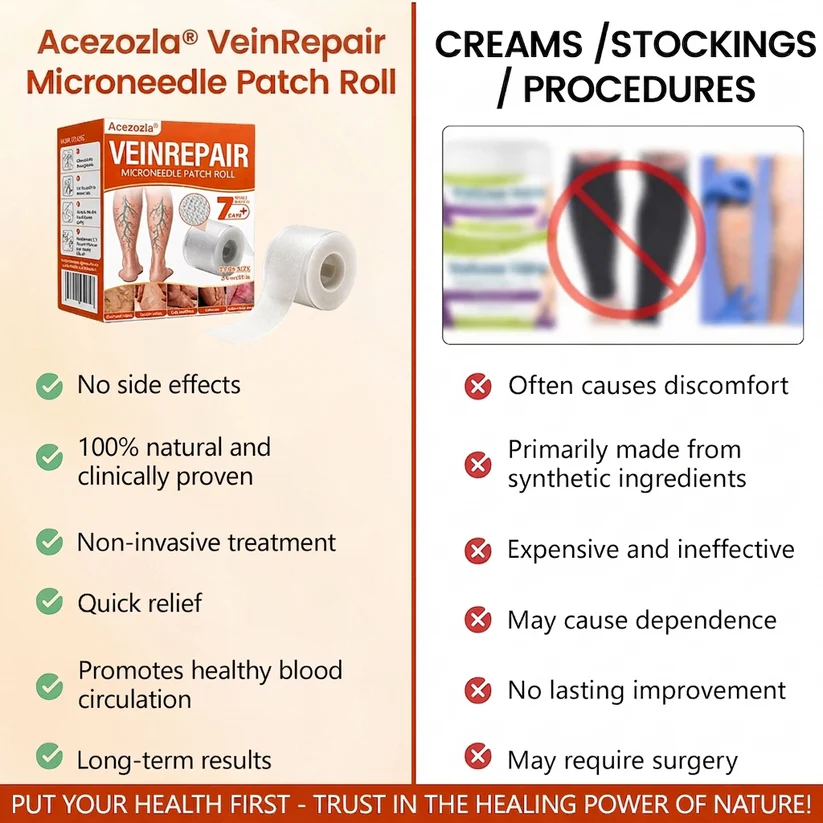
- Testimonials with implausibly specific dramatic arcs, one from a “nurse” describing hospital compression stockings as “a form of torture” — copywriter voice, not a nurse’s voice
- “180-day money-back guarantee” — the guarantee has grown across the pages you’ve shown me (15 → 30 → 60 → 90 → 180 days). This is a marketing lever, not a signal of confidence. Chargebacks on Shopify stores are also often disputed; the guarantee is only as good as the seller answering emails six months from now.
Ranking against the others:
Of the six products you’ve shown me, this is by far the worst — not because the marketing is the most extreme, but because of the actual risk profile:
- Acezozla VeinRepair patches — genuinely potentially harmful. Claims to contain a prescription drug, uses skin-penetrating technology, targets a serious medical condition, and encourages self-treatment of ulcers. This is the one where I’d stop and say: please don’t buy this, and if you know someone who has, they should talk to a doctor about actual vein evaluation.
- Luxevéria ReGenScar — misleading, encourages people to skip real treatment for keloids, but the product itself (silicone + botanicals) is inert.
- Nurovita Cooling Roller — invented disease framing, autoship trap, benign ingredients.
- Luxevéria eyeliner — fabricated origin story, real category of product underneath.
- Seurico / Madeca / Centella cream — sloppiest execution, overpriced generic Centella cream, low risk.
- Zyren neck cream — best of the bunch, still overhyped, real moisturizer underneath.
What real treatment for the conditions this claims to address looks like:
- Heavy, tired legs from prolonged standing: compression stockings (yes, the ones the copy mocks — they’re the actual first-line treatment because they actually work), elevation, movement breaks.
- Spider veins (cosmetic): sclerotherapy performed by a dermatologist or vascular specialist, or laser treatment. Yes, these cost more than a Shopify patch, but they’re the actual treatments.
- Varicose veins with symptoms: vascular ultrasound evaluation, then options ranging from endovenous laser/radiofrequency ablation to sclerotherapy to (rarely now) surgical stripping. A GP or vascular clinic referral is the right starting point.
- Skin changes, discoloration, or ulcers on the lower legs: this is a see-a-doctor-soon situation, not a Shopify-patch situation. Venous ulcers need proper wound care and often compression therapy under medical supervision. Diabetes and peripheral arterial disease can also cause leg ulcers and are misdiagnosed as “varicose.”
I’ve been asking across the last few messages what’s driving the string of these you’re sending me. I’ll ask once more directly because this one changes the stakes: are you or someone you know actually considering buying any of these — especially the Acezozla patches? If yes, I’d want to focus specifically there. If this is research for something else (writing, market analysis, warning others), I’m glad to keep going but it’d help to know so I can be more useful than “here’s another scam-page teardown.”
| Bundle & Save | Buy 1, Buy 2, Buy 3 |
|---|